The Problem
For years, Air India’s mobile app relied on a mobile-responsive web check-in experience loaded inside a webview. While this approach allowed faster deployment, it introduced major experience and performance bottlenecks — longer load times, inconsistent UI behavior, higher abandonment, and a fragmented app experience that felt detached from the rest of the native interface.
This was not unique to Air India. Most global airlines still depend on webview-based check-in flows. However, as part of Air India’s Vihaan.AI modernization, we identified an opportunity to leapfrog industry standards by creating a fully native, mobile-first check-in experience that would dramatically reduce time, effort, and friction for travelers.

What was Broken?
The legacy mobile check-in experience suffered from multiple structural issues.
Key issues included:
Check-in loaded inside a webview within the app
Slow page loads and performance delays
Inconsistent UI behavior compared to the native app
Higher abandonment during check-in
Excessive number of steps and screens
Lack of intelligent data reuse from booking flows
Research & Discovery
We analyzed NPS data, funnel analytics, session recordings, and customer feedback to understand why mobile check-in adoption lagged behind expectations. Data showed that long load times and repeated data entry were the primary drivers of abandonment.
We conducted competitor benchmarking across major global airlines and found that most mobile apps still relied on responsive web check-in inside webviews, presenting a clear opportunity for Air India to lead the industry with a true native solution.
Insights from VOC data and internal workshops revealed that travelers expected faster, simpler in-app journeys with fewer steps, consistent UI behavior, and smarter reuse of previously entered information.
These findings were also fed into the simplified web check-in program to ensure cross-platform alignment and consistency.
Transformation Strategy
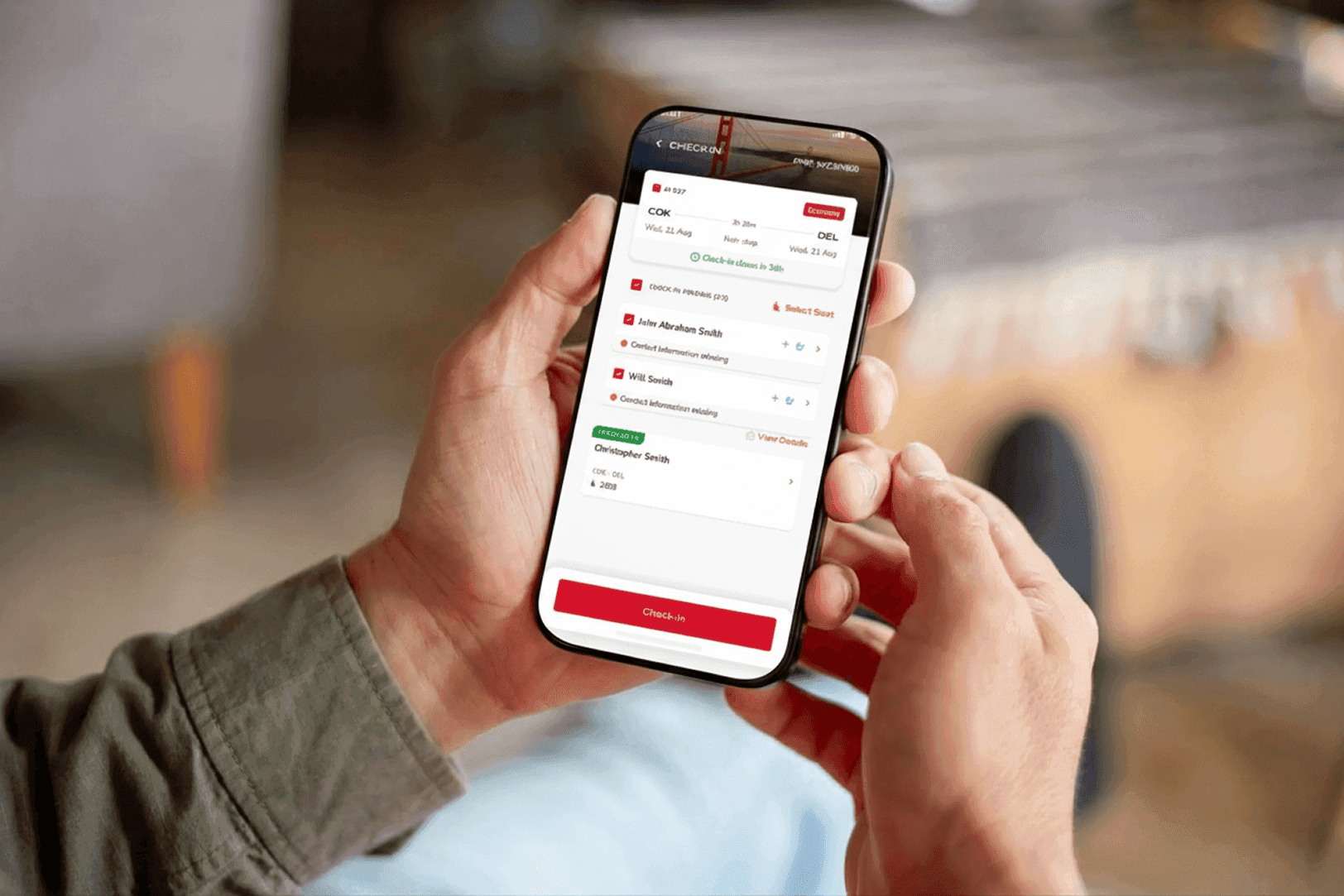
We designed a completely native mobile check-in experience that eliminated webview dependency and rebuilt the entire journey using mobile-first interaction patterns.
The experience introduced a Quick Check-in layer that reused passenger information, seat preferences, meal choices, and add-on services already provided during booking. For eligible users, the app surfaced pre-filled check-in details with clear edit and modify controls, allowing most travelers to complete check-in in just 2–4 taps.
The overall journey was simplified into a small number of focused steps — journey review, seat confirmation, add-ons (optional), and final confirmation — drastically reducing cognitive load and time to completion.
My Leadership & Role
I led the UX strategy, native interaction design, and journey architecture for the mobile app check-in transformation. I collaborated closely with product, mobile engineering, analytics, and airport operations teams to align digital experience design with real-world passenger processing.
I governed UI quality, extended the Air India design system for mobile-native components, and mentored designers contributing to the app ecosystem.
What We Built
The new native mobile check-in introduced a category-defining airline experience.
Key User Scenarios
The experience was optimized for mobile-first travelers, frequent flyers, business travelers, and loyalty members who expected fast, reliable self-service check-in.
Key experience improvements included:
Fully native in-app check-in flow
Quick Check-in using booking data reuse
Completion possible in just 2–4 taps
Intelligent edit and modify controls
Mobile-optimized seat maps and add-on flows
Performance-optimized native screens

Feature Highlights
Notable features included:
Quick Check-in
Smart pre-filled passenger data
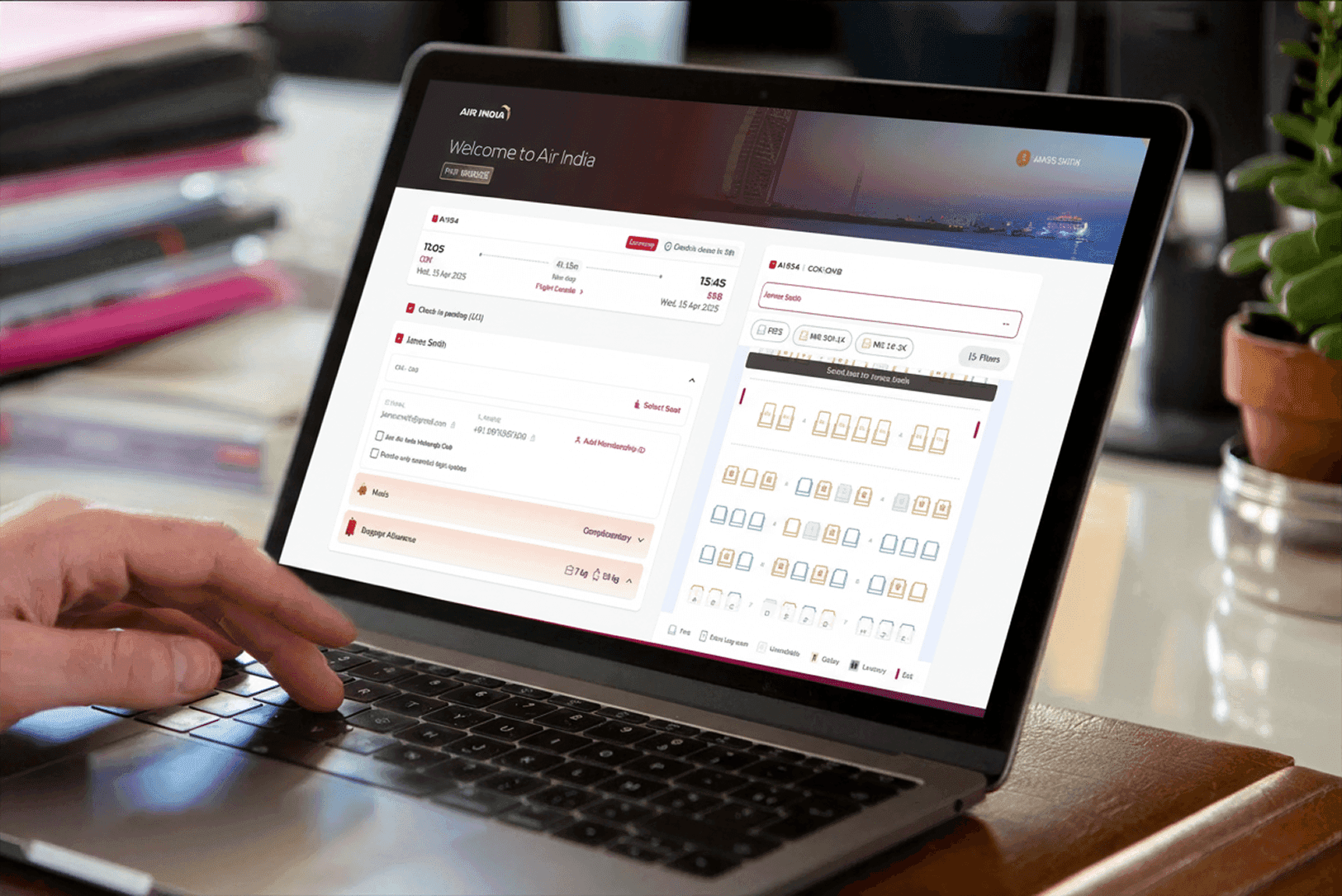
Native interactive seat maps
Streamlined add-on purchases
Instant confirmation and boarding pass access
Business Impact
The native mobile check-in experience delivered strong improvements in speed, adoption, and satisfaction.\
✅ Check‑in completion rate +35%
💰 Avg. seat revenue per booking +₹340
📈 NPS improved –8 → +41
💺 Paid seat conversion +125%
📞 Call center inquiries reduced 48%
Learnings
Native mobile experiences outperform webview-based implementations in speed, reliability, and user trust. Intelligent data reuse can transform mandatory processes into frictionless moments.
Career Significance Strategy
This project positioned me as a driver of mobile-native innovation at Air India and demonstrated my ability to redefine industry-standard airline experiences through performance-led UX design.