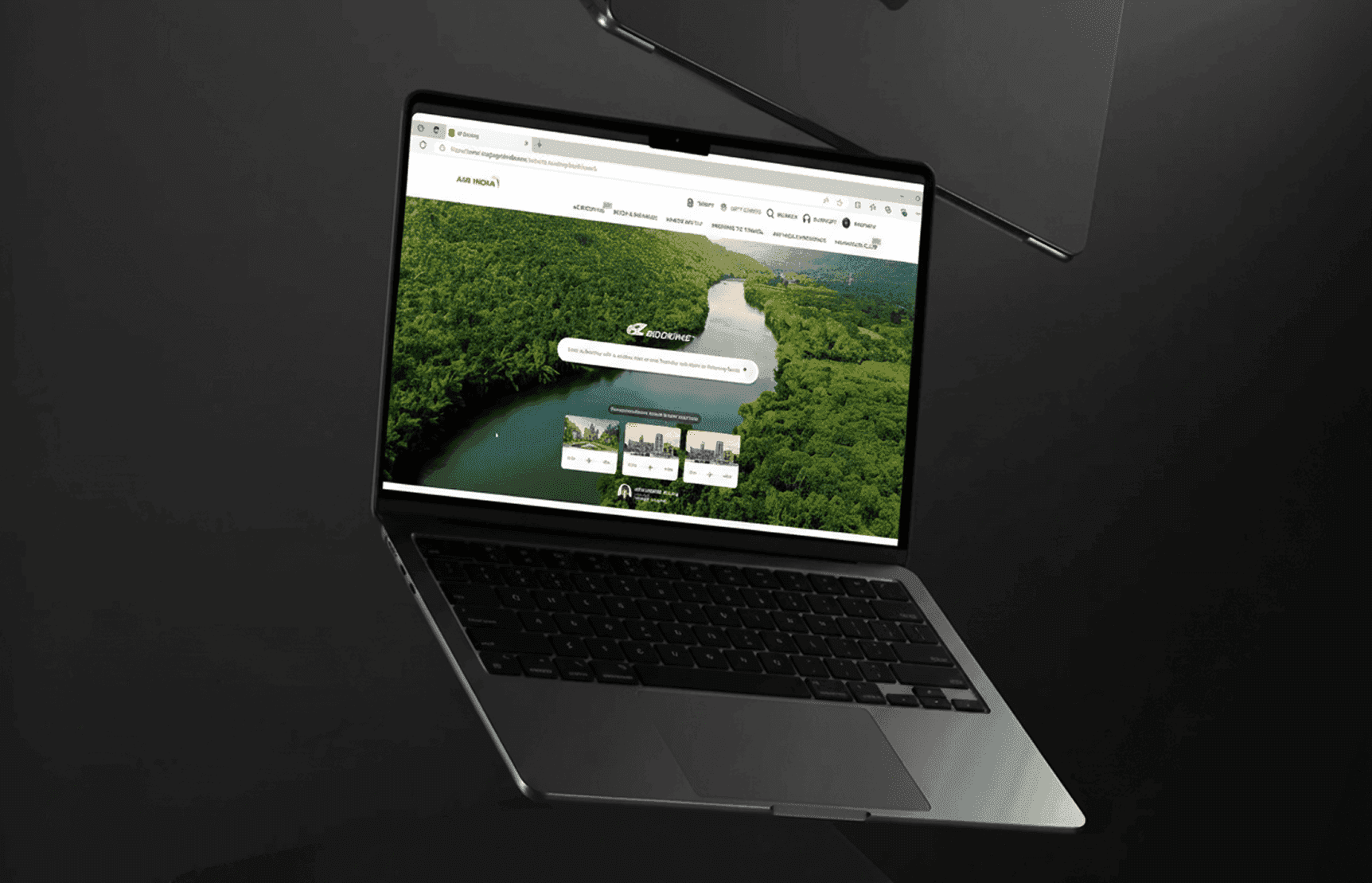
The Problem
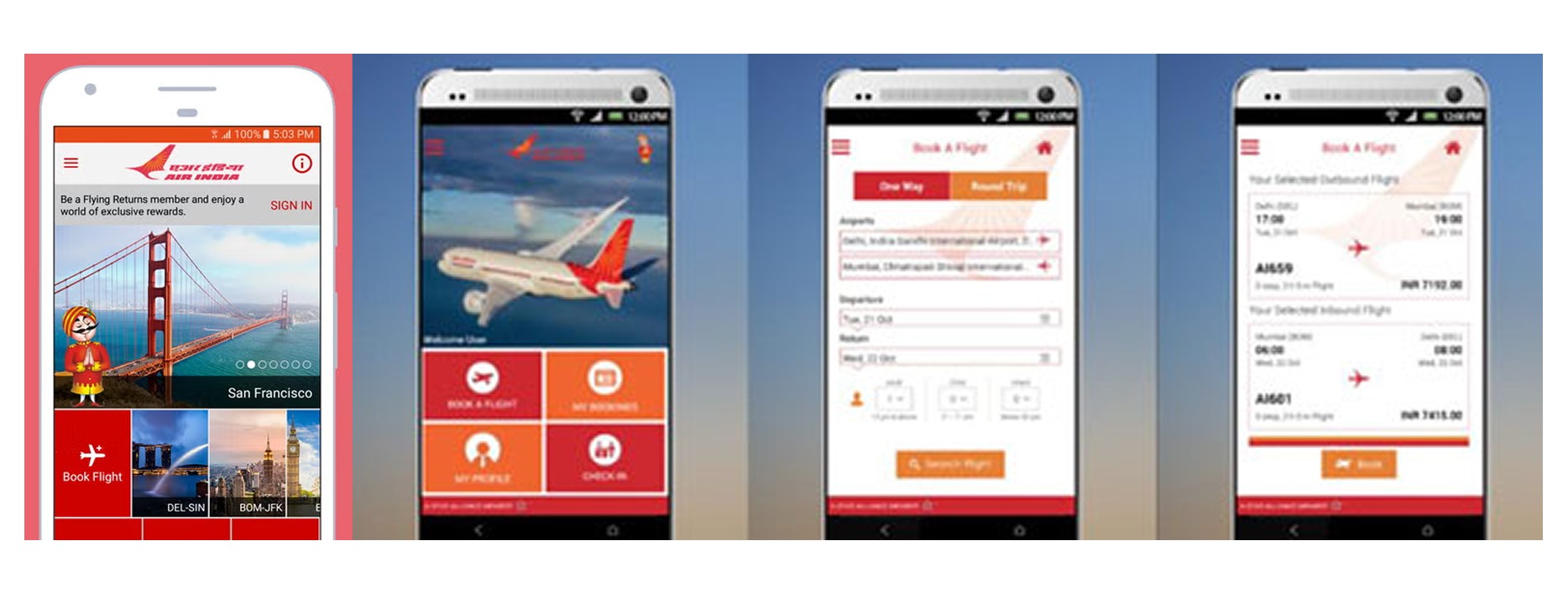
Air India's mobile application was one of the weakest links in the airline’s digital ecosystem. The legacy app was built on outdated technology, delivered a fragmented experience, and carried low ratings across app stores. Core journeys such as booking, check-in, and flight status were slow, confusing, and inconsistent, resulting in low adoption and poor customer trust.
As part of Air India’s Vihaan.AI transformation, the mobile app was identified as a critical pillar to modernize the airline’s digital presence. The objective was to rebuild the app into a high-performance, native-first, feature-rich mobile platform that could compete with the world’s leading airlines.
This transformation was executed in two major phases — a native platform rebuild followed by a full brand and experience transformation aligned with Air India’s rebranding.
What was Broken?
The legacy mobile application presented significant experience and performance limitations.
Key issues included:
Low app store ratings and poor user sentiment
Outdated UI and fragmented navigation
Non-native performance and slow loading
Limited in-app features and self-service journeys
High dependency on webviews
Poor retention and repeat usage
Research & Discovery
We analyzed NPS data, app store reviews, funnel analytics, and customer feedback to identify the root causes of dissatisfaction. Heatmaps and session recordings revealed that long load times, inconsistent UI behavior, and lack of self-service capabilities were primary drivers of negative sentiment.
Competitor benchmarking across leading global airline apps highlighted the importance of fully native experiences, quick-access self-service features, and real-time operational tools.
These insights shaped a roadmap focused on performance, native interaction design, and high-impact utility features.
Transformation Strategy
The transformation followed a phased, risk-mitigated rollout.
The first phase focused on building fully native iOS and Android applications to eliminate webview dependencies and improve performance, stability, and UI consistency. Core journeys were rebuilt with modern mobile interaction patterns and early self-service enhancements.
The second phase aligned with Air India’s rebranding and delivered a complete visual, functional, and experiential overhaul. We introduced a modern design language, improved navigation architecture, and launched several new in-app utility and personalization features to significantly increase daily active usage.
My Leadership & Role
I led the UX and product experience strategy for the mobile app transformation, working alongside the Head of Mobile Apps and a team of four designers. I governed experience principles, UI architecture, and design system implementation across iOS and Android platforms.
I collaborated closely with product, engineering, analytics, loyalty, and operations teams, mentored designers, and ensured design quality across every release.
What We Built
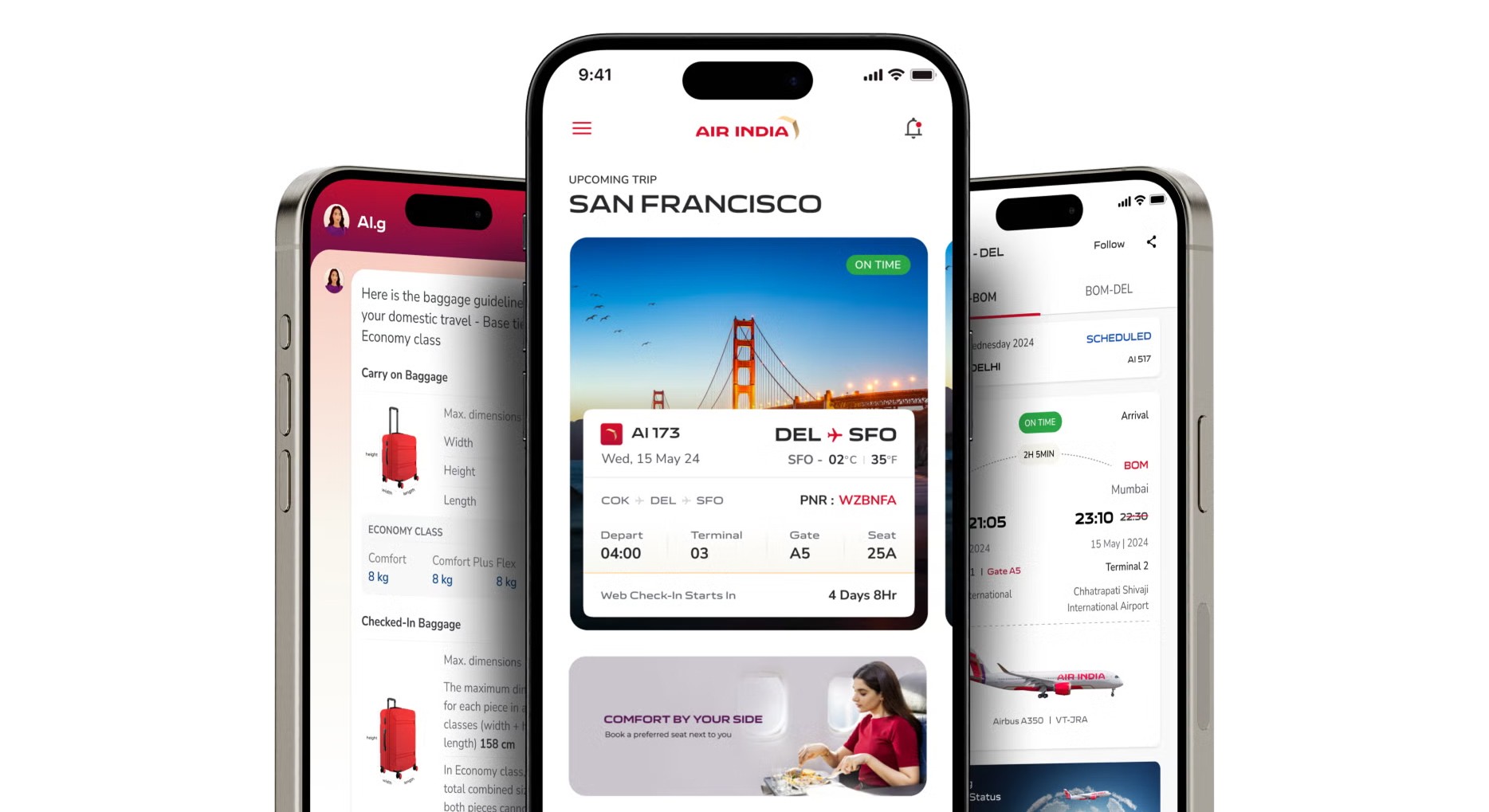
The redesigned mobile app evolved into a high-utility, performance-first airline companion.
Key experience improvements included:
Fully native iOS and Android platforms
Modern brand-aligned UI
Faster performance and improved reliability
Expanded self-service journeys
Modular mobile design system
Personalized in-app experiences
Feature Highlights
Notable features included:
AEYE Vision (AI-powered travel assistant)
Smart baggage calculator
Real-time flight status and disruption alerts
Quick Check-in
Integrated self-reaccommodation
Loyalty and profile management
Smart notifications and trip reminders
Business Impact
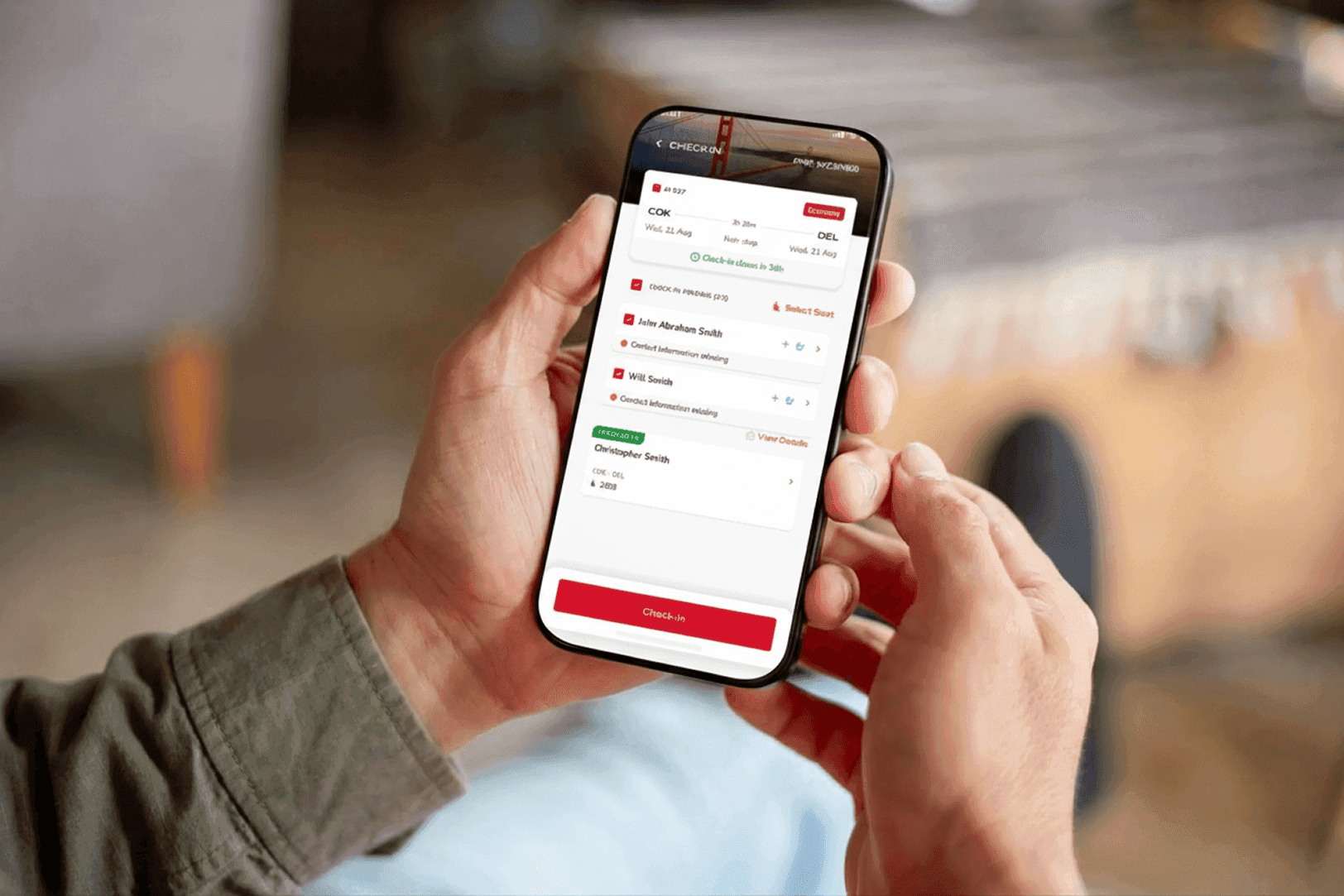
The native mobile check-in experience delivered strong improvements in speed, adoption, and satisfaction.
⏱ Check‑in time reduced 42%
💎 Crash rate dropped 96%
📈 Paid seat selection: 3% → 7%
💰 NPS improved –12 → +46
Learnings
AI-powered experiences must be transparent and trust-driven. Speed alone is not enough — users must feel in control of automated decisions, especially in high-value purchases like airline tickets.
Career Significance Strategy
Ez Booking positioned me as a driver of AI-led product innovation within Air India’s digital ecosystem and demonstrated my ability to design intelligent, scalable experiences for high-value customer segments.